- GUGMC Earns Top Grade in Coronary Artery Bypass Surgery Evaluation 2025/11/11
Notice
ListGUGMC Earns Top Grade in Coronary Artery Bypass Surgery Evaluation
CABG is a surgical procedure that creates a new blood vessel pathway using an artery or vein from another part of the body to bypass a blocked coronary artery that supplies blood to the heart muscle. Proper treatment requires extensive surgical experience and a well-organized clinical system.
The assessment evaluated several indicators, including the total number of CABG surgeries performed at each hospital, the rate of using internal thoracic arteries, prescription rate of antiplatelet agents at discharge, rates of reoperation due to postoperative bleeding or hematoma, mortality rate, readmission rate, and average hospital stay.
Gil Medical Center achieved an excellent overall score of 96 points, earning the top grade. Notably, the hospital has consistently received Grade 1 ratings in every CABG assessment since the evaluation program began in 2010.
The Cardiovascular Center at Gil Medical Center continues to deliver outstanding outcomes in complex and emergency cardiac surgeries through close multidisciplinary collaboration among specialists in cardiology, cardiovascular and thoracic surgery, pediatric cardiology, anesthesiology, and radiology.
- GUGMC Introduces High-Precision Radiation Therapy System ‘TrueBeam’ 2025/11/10
Notice
ListGUGMC Introduces High-Precision Radiation Therapy System ‘TrueBeam’
Gachon University Gil Medical Center announced on the 15th that it has recently introduced TrueBeam, a high-precision radiotherapy system for cancer treatment.
TrueBeam, a linear accelerator used for radiation therapy, precisely adjusts the shape and intensity of the radiation beam delivered to the target area, maximizing its effectiveness in destroying cancer cells while minimizing exposure to surrounding normal tissues.TrueBeam can control radiation beams with submillimeter accuracy (less than 1 mm), supporting advanced treatment techniques such as IMRT (Intensity-Modulated Radiation Therapy), SBRT (Stereotactic Body Radiation Therapy), IGRT (Image-Guided Radiation Therapy), and RGRT (Respiratory-Gated Radiation Therapy).
Its high radiation output shortens treatment time, improving both treatment outcomes and patient satisfaction. It is utilized for the treatment of major cancers such as breast, rectal, lung, head and neck, liver, prostate, lymphoma, and brain tumors.The TrueBeam system introduced at Gachon University Gil Medical Center is the first in Asia to feature the “RapidArc Dynamic” solution.
This next-generation technique enables highly customized and optimal radiation therapy with just one rotation of the gantry. By maximizing the function of the collimator, which controls the radiation beam, it allows for real-time collimator adjustment during treatment, enhanced motion speed and functionality, simplified treatment processes, and optimized treatment planning — ultimately providing the highest level of precision care.Together with TrueBeam, Gachon University Gil Medical Center also plans to create synergy by utilizing other recently adopted advanced radiation therapy systems such as Halcyon and the AlignRT markerless surface-guided radiation therapy system, enhancing precision and treatment safety in radiotherapy.
- GUGMC Cardiologists’ Study Selected as Top Late-Breaking Trial at EuroPCR 2025 2025/11/03
Notice
ListGUGMC Cardiologists’ Study Selected as Top Late-Breaking Trial at EuroPCR 2025
Gachon University Gil Medical Center has adopted the 'AI-Rad Companion Chest CT' software solution developed by Siemens Healthineers. This AI-based imaging analysis solution automatically analyzes chest CT scans, enhancing both diagnostic accuracy and interpretation efficiency.
The software utilizes artificial intelligence to analyze not only the lungs, but also major thoracic organs such as the heart, aorta, and spine, enabling early detection of a wide range of thoracic abnormalities.
With the introduction of this upgraded AI solution, the hospital is now able to: Improve the accuracy and reliability of image interpretation through AI-assisted diagnosis, Provide more precise evaluations for high-risk patients or those requiring early diagnosis of lung diseases, and Automatically analyze and measure various organs and tissues and generate structured reports.
This advancement reflects Gil Medical Center's continued commitment to incorporating cutting-edge AI technology in clinical practice for enhanced patient care and diagnostic excellence. - GUGMC Implements AI-Powered Chest CT Analysis Solution 2025/11/03
Notice
ListGUGMC Implements AI-Powered Chest CT Analysis Solution
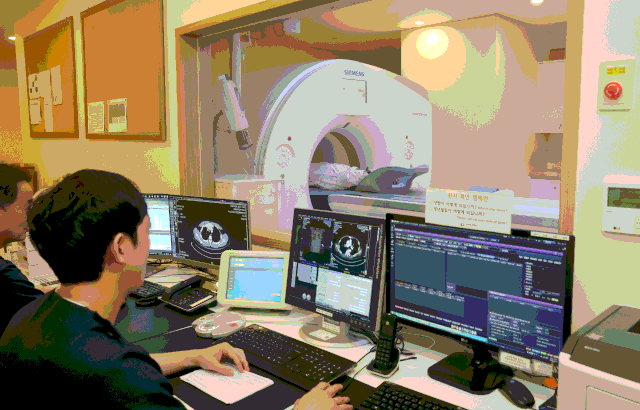
Gachon University Gil Medical Center has adopted the 'AI-Rad Companion Chest CT' software solution developed by Siemens Healthineers. This AI-based imaging analysis solution automatically analyzes chest CT scans, enhancing both diagnostic accuracy and interpretation efficiency.
The software utilizes artificial intelligence to analyze not only the lungs, but also major thoracic organs such as the heart, aorta, and spine, enabling early detection of a wide range of thoracic abnormalities.
With the introduction of this upgraded AI solution, the hospital is now able to: Improve the accuracy and reliability of image interpretation through AI-assisted diagnosis, Provide more precise evaluations for high-risk patients or those requiring early diagnosis of lung diseases, and Automatically analyze and measure various organs and tissues and generate structured reports.
This advancement reflects Gil Medical Center's continued commitment to incorporating cutting-edge AI technology in clinical practice for enhanced patient care and diagnostic excellence.
- GUGMC receives Fourth Consecutive Certification as Research-Driven Hospital 2025/10/27
Notice
ListGUGMC receives Fourth Consecutive Certification as Research-Driven Hospital
As announced on March 26 by Korea's Ministry of Health and Welfare, Gachon University Gil Medical Center has been officially certified once again as a Phase 1 Research-Driven Hospital by. With this milestone, the hospital proudly stands as the first in Korea to receive this designation four times in a row.
This certification recognizes Gil Medical Center's research competitiveness, including its research organization and personnel, the quality of its research capacity, its international-standard research system, and its sustainable research support governance.
Gachon University Gil Medical Center has continuously strengthened its role as a key player in Korea's healthcare research and innovation ecosystem, striving to lead the advancement of the healthcare and biomedical industry through its cutting-edge research capabilities.
- GUGMC Cancer Center Ranked No.1 Nationwide for Third Consecutive Year 2025/10/27
Notice
ListGUGMC Cancer Center Ranked No.1 Nationwide for Third Consecutive Year
The Incheon Regional Cancer Center, operated by Gachon University Gil Medical Center, has been ranked No.1 for the third consecutive year in the national performance evaluation of regional cancer centers conducted by Korea's Ministry of Health and Welfare (MOHW).
The Ministry recently announced the results of its assessment of 13 regional cancer centers across the country for their implementation of the 2024 National Cancer Control Program. The Incheon Regional Cancer Center was once again recognized as the top-performing institution, following its leading evaluations in 2022 and 2023.
In 2011, Gachon University Gil Medical Center became the first private university hospital in Korea to be designated as a regional cancer center. While most regional cancer programs are led by national university hospitals, Gil Medical Center has led the Incheon region’s cancer prevention and early detection efforts for the past 14 years, conducting public education campaigns and screening initiatives to improve cancer awareness and examination rates.
The center continues to implement a variety of initiatives aimed at improving the quality of life for local residents and cancer patients, including educational programs for medical professionals, patients, caregivers, and the general public. It also promotes inter-institutional collaboration with community organizations and conducts outreach activities to support cancer survivors and raise public awareness.
In particular, the center has achieved meaningful results through customized cancer control strategies that reflect Incheon’s unique characteristics, where urban and rural populations coexist. Special attention is given to narrowing the cancer screening rate gap between rural and urban areas.
In terms of cancer treatment, Gachon University Gil Medical Center opened a dedicated Women's Cancer Center last year, providing specialized care in breast, thyroid, and gynecologic cancers, and established a CAR-T Cell Therapy Center, equipped with advanced immunotherapy facilities using patients' own immune cells to treat high-risk cancers.
To enhance patient comfort in radiation therapy, the hospital has also introduced markerless radiotherapy guidance technology—a first in Incheon—across all treatment rooms in the Department of Radiation Oncology, and continues to invest in state-of-the-art equipment for cancer care. - Special Features of Gachon University Gil Medical Center 2025/10/23
Notice
ListSpecial Features of Gachon University Gil Medical Center
GUGMC Operates Nine Specialized Intensive Care Units for Critically Ill Patients: Gachon University Gil Medical Center operates nine specialized intensive care units (ICUs) tailored to the treatment of critically ill patients. These include three internal medicine ICUs, as well as dedicated units for surgical, emergency, trauma, cardiovascular, cerebrovascular, and neonatal intensive care. Each ICU is equipped with advanced medical systems and managed by highly skilled medical staff with expertise in intensive care.
Emergency Medicine: The hospital’s Emergency Medical Center has consistently received the highest rating in national emergency medical institution assessments conducted annually. In 2011, Gil Medical Center became the first in Korea to introduce the Doctor Helicopter (air ambulance) service, establishing an optimized system for the transport of critically ill patients from islands and remote areas with conditions such as cardiovascular emergencies or severe trauma. In 2014, the Incheon Regional Trauma Center—the first of its kind in Korea—was opened and has since treated over 30,000 trauma patients over the past decade. The center includes dedicated facilities for trauma care, including operating rooms and intensive care units, and has significantly advanced the region’s emergency medical response system.
Cardiovascular and Cerebrovascular Care: The Cardiovascular Hospital at Gil Medical Center is a leading institution for heart and vascular disease treatment in Korea and serves as a final referral hospital in the Incheon–West Coast region. Specialized centers are operated for heart failure, pulmonary hypertension, and arrhythmia, along with a catheter-based intervention center offering high-difficulty procedures such as transcatheter aortic valve replacement (TAVR). The Arrhythmia Center performs treatments including radiofrequency catheter ablation for atrial fibrillation. In cerebrovascular care, Gil Medical Center has received first-grade ratings in the Acute Stroke Care Quality Assessment conducted by the Health Insurance Review & Assessment Service (HIRA) every year since 2005.
Cancer Care: In cancer treatment, the hospital has earned first-grade ratings in national adequacy evaluations for major cancer types. Specialized clinics are operated for women’s cancers, recurrent/metastatic cancers, and hematologic malignancies. The Markerless Radiotherapy Center and Hematopoietic Stem Cell Transplant Unit, opened in 2023, offer advanced, patient-centered cancer care. All beds in the transplant ward are single-patient isolation rooms with controlled sterile environments. In 2024, the hospital launched a CAR-T Cell Therapy Center equipped with state-of-the-art GMP facilities, and is successfully performing immunotherapy procedures.
High-Risk Obstetrics and Pediatric Critical Care: Over 60% of all deliveries at Gil Medical Center involve high-risk pregnancies. In 2018, Gil was designated as a High-Risk Maternal and Neonatal Care Center, taking a core role in the treatment of critically ill mothers and newborns in the region. To support the Neonatal Intensive Care Unit (NICU), the hospital has established an integrated cooperative involving pediatric surgery, pediatric cardiology, and other specialties, enabling comprehensive care for newborns. The NICU has also received a first-grade rating in the national adequacy assessments.
Establishing a Comprehensive Regional Referral and Collaboration System: Gil Medical Center has built a collaborative network with over 1,200 hospitals nationwide, including those in the Incheon area. To strengthen fast-track referral pathways for critically ill patients, the hospital is enhancing the functions of its Referral Coordination Center and continues to refine its specialized medical systems. In 2021, the hospital was designated as a Regional Public Medical Center, becoming the core institution in Incheon’s public healthcare system and expanding its capabilities and networks for delivering essential medical services.
- GUGMC Implements AI-Assisted Mammography Interpretation Program to Enhance Breast Cancer Diagnosis 2025/10/23
Notice
ListGUGMC Implements AI-Assisted Mammography Interpretation Program to Enhance Breast Cancer Diagnosis
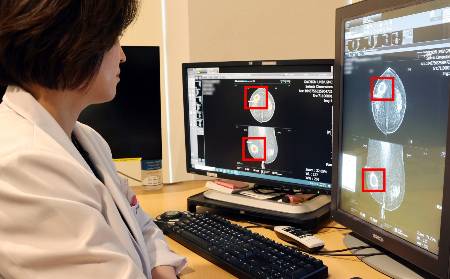
Gachon University Gil Medical Center has introduced an AI-powered imaging interpretation support program to enhance the accuracy and speed of breast cancer diagnosis. The program, “Lunit INSIGHT MMG,” utilizes AI to analyze mammography images, clearly highlighting suspicious lesions for radiologists.
This AI-based system assists physicians during imaging procedures such as X-rays, ultrasound, and mammography, significantly improving the reliability and efficiency of the diagnostic process. Notably, the system automatically assesses breast density, a factor closely linked to breast cancer risk, and provides this data to clinicians.
Approximately 80% of Korean women have dense breast tissue, which is associated with a higher risk of breast cancer compared to non-dense breasts. By incorporating Lunit INSIGHT MMG into clinical workflows, the hospital aims to improve diagnostic accuracy and speed, thereby increasing early detection rates for breast cancer.
In addition, Gachon University Gil Medical Center has recently completed the development of its in-house AI system “Dr. Answer 2.0 Smart Endo”, following the earlier version Dr. Answer 1.0. This advanced AI tool is now being used in clinical practice to assist with endoscopic examinations for colorectal and gastric cancers.
Using AI algorithms and big data analysis, the Smart Endo system enables physicians to detect abnormalities and potential lesions in real-time during colonoscopy and gastroscopy procedures, supporting more precise and timely diagnoses. - Gachon University Gil Hospital TV-YouTube Channel Receives "Silver Play Button" 2025/10/22
Notice
ListGachon University Gil Hospital TV-YouTube Channel Receives "Silver Play Button"
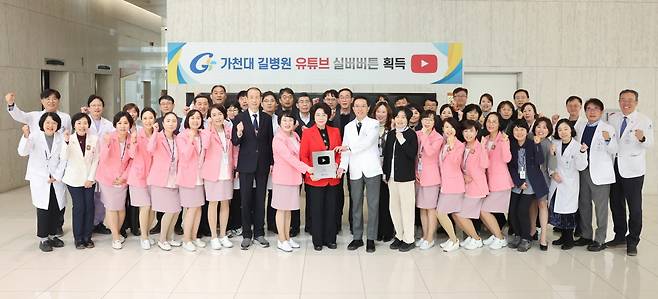
“Gachon University Gil Hospital TV”, a non-profit YouTube channel run by Gachon University Gil Medical Center, has surpassed 100,000 subscribers, earning the platform’s Silver Play Button.
The channel was launched in July 2019 with the goal of delivering accurate and reliable health information. Within about a year, it reached 1,000 subscribers, and grew tenfold to 10,000 after two years. In just over four years, the subscriber count exceeded 100,000. As of July 18, the channel has approximately 122,000 subscribers. Reaching such a milestone in five years without commercial intent is seen as an encouraging achievement.
Since its founding, Gachon University Gil Medical Center has consistently worked to raise public health awareness through initiatives such as community outreach lectures. In 1958, hospital founder Dr. Lee Gil-ya began delivering health education and medical volunteer services to medically underserved rural areas. She believed that providing accurate health information was just as important as treating illness.
That spirit continues today. The hospital still conducts visiting health lectures, where medical professionals visit local public health centers and senior welfare facilities to provide on-site medical education.
In response to the growing demand for digital content and more diverse patient communication, the hospital has expanded its efforts through YouTube. Gil Hospital TV features a range of videos, including segments like “Hall of Medical Experts” and “Star Docs,” offering health lectures by specialists. The channel also covers patients' commonly raised questions during consultations, making it a helpful and accessible educational tool for the general public. - Extremely Preterm Infant Born at GUGMC Discharged in Good Health After 140 Days in NICU 2025/10/22
Notice
ListExtremely Preterm Infant Born at GUGMC Discharged in Good Health After 140 Days in NICU
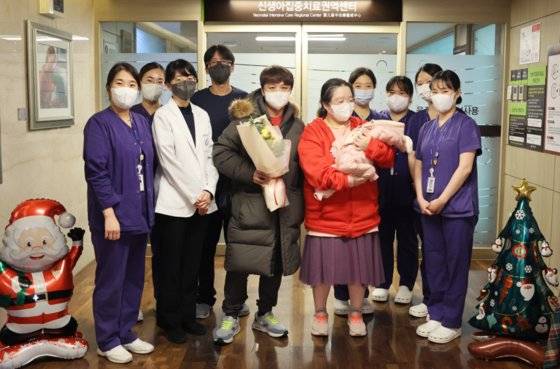
An extremely preterm infant, born weighing only 400 grams, has been discharged in good health after receiving treatment in the Neonatal Intensive Care Unit (NICU) at the Gachon University Gil Medical Center.
On December 23, the hospital announced that the infant, delivered via cesarean section at 23 weeks and 4 days of gestation on August 2, was discharged on December 19 after 140 days of intensive care. The baby’s mother, Ms. A, was originally receiving prenatal care at a local obstetrics clinic but was transferred to Gil Medical Center’s High-Risk Maternal and Neonatal Care Center due to complications from pregnancy-induced hypertension (PIH).
The baby was born as an extremely low birth weight infant (ELBWI), at just 400 grams. Infants born at less than 37 weeks of gestation (preterm infants) or weighing under 2.5 kilograms (low birth weight infants) often require specialized medical support after birth. In particular, extremely low birth weight infants, those weighing under 1,000 grams, are highly susceptible to complications such as neonatal respiratory distress syndrome (NRDS) and circulatory instability, requiring highly specialized care in the NICU.
This baby was also vulnerable due to immature skin and underdeveloped organs, which made her prone to external infections. However, under the dedicated care of the NICU medical staff, she grew steadily and reached 2.8 kilograms at the time of discharge after 140 days of treatment.
News